How Advanced Is Virtual Reality?
Looking at the evolution, innovations, and the next big leap for immersive technology
In the last five years, developments in virtual reality (VR) have changed from a very niche area to absolutely mainstream technology. The days of VR being distinguished from gaming headsets and in laboratory settings are now seen as bygone years. Today, VR technology has become the veritable voice for innovations involving corporate training, health simulation, architecture, education, and defense.
This leads to the question-how advanced is VR really nowadays compared to five years ago?
The answer is that the rapid advancement of hardware, software, and user experience, all converging towards putting VR at an entirely new level of realism, accessibility, and technological intelligence and sensitivity.
Development of Virtual Reality Technology
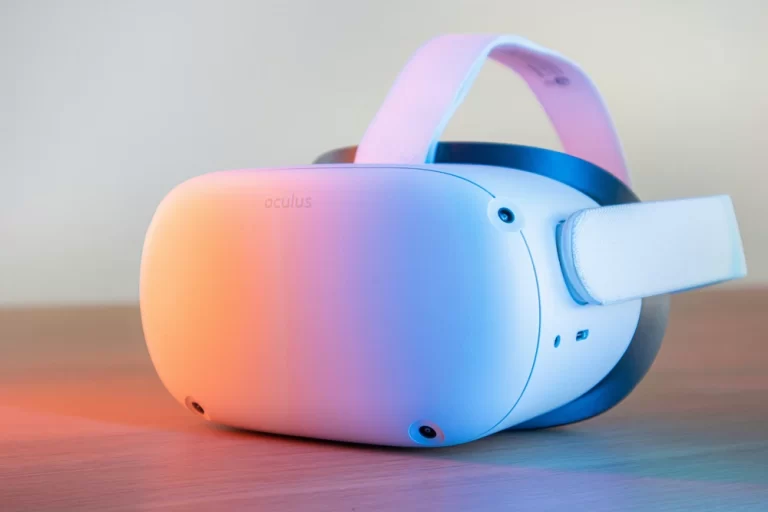
Much of this was good five years ago, but the very interesting panorama was shut in some ways. The much-lauded visual experiences put forth by companies such as Oculus and HTC had limitations — clunky setups and, to some extent, most were ill-designed for consumer use because of motion sickness and immobility. The developers were plagued by this high cost coupled with very complex setups.
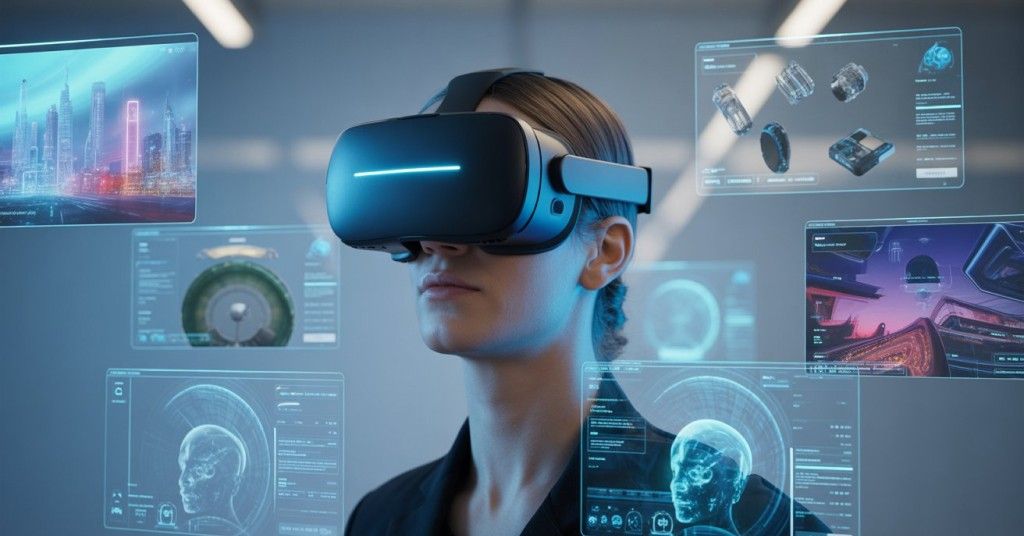
he rapid development of Virtual Reality (VR) technology is transforming the automotive industry, especially in the way customers explore and customize vehicles. With 3D car product configurators powered by VR, automotive brands can offer immersive, real-time visualization where users can step inside a virtual showroom, examine every detail of the car, change colors, interiors, accessories, and instantly see the results in a lifelike environment. This reduces decision-making time, enhances customer confidence, and elevates the buying experience. For manufacturers and dealers, VR-driven configurators minimize physical prototype costs, streamline product presentations, and create a more engaging, modern sales process that aligns with the expectations of today’s digital-first consumers.
Now looking back to present day – with several advancements in the areas of hardware, graphics, AI, and connectivity, VR is regarded as seamless, wireless, and very detailed. In terms of evolution, VR has passed through three phases:
2015-2018: The Experimental Phase
The bulk of immersion was focused on basic head tracking and the use of stereoscopic displays. While this technology wowed the enthusiasts, it was highly unaffordable for the mainstream experience.
2019-2022: The Emergence of the Well-Accessed Systems
The launch of fully untethered independent headsets like Oculus Quest, which does not require any wire or PC for functionality, marks a drastic removal of the tether. Adjusting its pricing, the app ecosystem grew exponentially, and mobile processors embraced the ability to render real-time 3D environments with ease, allowing the average believer to be drawn in by the magic of VR.
2023-2025: The Intelligence Phase
VR is rapidly evolving beyond visual aspects and strong AI foundations, machine learning, and spatial computation. Now, with hand tracking, facial tracking, mixed-reality layering, and ultra-realistic haptics, we create human-centered experiences that are enjoyable, realistic, and natural.
How Much More Advanced Is VR Today Compared to 5 Years Ago?
VR is, in short, about intelligence, slenderness, and closest to real life. One could say five years of those improvements have changed the average human relationship with this emerging technology. In all, here we present a snapshot.
1. Hardware Developments
Then: Clunky wired headsets with basic low resolution and limited motion tracking.
Now: Stand-alone headsets like Meta Quest 3, Apple Vision Pro, and HTC Vive XR Elite are lightweight and have 4K+ displays with inside-out tracking and better battery life. VR systems have become comfortable and lightweight, and removed nearly all barriers for entry.
2. Visual Quality & Rendering
Then: Blurry, pixelated graphics with low frame rates.
Now: Foveated rendering, HDR displays, and higher refresh rates (120Hz+) bring realism into rendering. Spatial sound and advanced shaders have all been added to increase immersiveness. Ray tracing, which is historically a computer-only visual advance, is now being optimized as a practically viable and full-featured VR technology.
3. Tracking & Interaction
Then: Controllers that required external sensors.
Now: Rather than needing controllers, systems provide full hand tracking and eye tracking as well as gesture-based control systems that allow for interactions that feel natural in design. Eye tracking further optimizes performance through dynamic foveation, offloading the GPU while providing a realistic interaction.
Artificial Intelligence and Machine Learning
Then: Static environments with coded interactions.
Now: AI-based adaptive systems and programs according to the user behavior inside the experience. Avatars to imitate facial expressions by using machine learning-Virtual assistants learn preferences. The environment will now evolve per interactions in its real-time context. Moving VR from a static event to an active and responsive medium.
Cloud VR and Connectivity
Then: Limited scalability with local storage.
Now: Of 5G edge networks, indeed, one involves delivering low-latency cloud-based VR websites for lightweight devices hooked on the most effective processing for immersive VR experiences for multiplayer and enterprise activity.
Mixed Reality and Spatial Awareness
Then: VR, as experienced in its virtual environment.
Now: Mixed Reality (MR) applications – combination of the worlds of reality and virtual environments. Devices are mapping the environments where the user can indicate what there is in real context and superimpose some holograms or others related media on that real context. The superimposed resources would, one assumes, really pronounce more comfort and safety in the extent that such superimposed resources cause mixed or creative use cases.
Key Trends Driving Change in VR
1. Foundation Development for the Metaverse
The whole momentum toward the metaverse has diverted even more investments into the ecosystems related to VR. Some of the more popular examples are Meta Horizon Worlds and NVIDIA Omniverse, while the others are environments within Apple Spatial Computing. These areas define a new space for social interaction, creativity, and collaboration. The applications at the core of VR have expanded into virtual real estate, 3D commerce, and new possibilities in immersive workplaces.
AI’s Personalization Helping
AI of VR enables personalization or adaptation of experiences in real-time; many cases creativity is involved. Experience learn behaviors from the user for customization of narrative. Finally, some generative AI might be hooked up for dilating those scenes or interpreting emotionally based possible perceptions for narrative about the environment besides 3D storytelling-rendering like NLP technology.
Next-Gen Optics and Displays systems
Pancake-lens micro-OLED displays in VR headsets bring an increase in brightness and a decrease of distortion-all in extremely small sizes. It corresponds the visual sharpness equal to the human eye and guarantees optimum comfort during lengthy sessions of gaming or productivity.
4. Haptic Feedback & Sensory Interactions.
Now haptic gloves, suits, and controllers permanently replicate beautifully the texture, temperature, and pressure sensations. Thus, haptics closes the sensory “gap” between the physical and virtual worlds and allows surgeons to “feel” virtual objects while training in realized circumstances.
5. Development Ecosystems and Open Standards.
Open frameworks such as OpenXR and Unity XR open up ways for realizing VR experiences across several platforms. This tops the trend that allows a developer to create a VR experience once and use it on multiple devices and considerably reduces the time needed for innovation cycles-and with it opportunity costs for independent creators and such startups.
6. Enterprise Applicati ons
Industries such as healthcare and manufacturing are implementing VR for simulation, designing, and collaboration. For example, Boeing, Siemens, and the Mayo Clinic would use the technology for learning pilots, rehearsing operation procedures, or engaging in remote prototyping.
Applications: How Sectors Leverage Cutting-Edge VR
Healthcare
Surgeons really appreciate the use of VR in simulation of complex surgery, providing real-time feedback for reference. There is a use of VR in patient care for aversion therapy, pain management, and physical rehabilitation wherein patients are immersed in simulated therapeutic environments. VR makes training safer and much more repeatable, precise training reduces variability of the final outcomes.
Education
Using VR, virtual classrooms, and laboratories allow learning to become experiential and interactive. Students can immerse themselves in the realms of studying anatomy, physics, or historical sites; visual cues emphasized in immersion create a win-win situation for both retention and engagement.
Real Estate & Architecture
Real estate developers and clients walk-throughs of 3D-modeled buildings before their construction. Interactive visualization allows for refining decision making during design, saving time and labor, and giving buyers increased confidence.
Corporate Training
VR is used by companies like Walmart and Accenture to train their workforces. VR is applied to customer service simulations as well as on-ramping safety modules. The engagement factor makes VR way more effective for training than e-learning.
Entertainment & Gaming
The Entertainment Industry & Gaming are practically the two sectors that led into the adoption of VR. Games such as Half-Life: Alyx or Beat Saber are great examples of descriptive storytelling, often juxtaposed with an interactive physical counterpart set within a VR environment, ultimately creating immersive and engaging experiences.
Tourism & Cultural Heritage
Museums, travel agencies, and cities promote or offer a virtual tour of cultural and heritage historical elements to which users can engage within the comfort of their own homes.
Challenges and Considerations
Cost and Accessibility:
Even with reductions in price, high-end VR headsets and accessories are still priced much higher than traditional computers. This limits the access for consumers and small businesses, particularly in the developing world. There are affordable options to buy standalone devices, but most lack in graphics, performance, or tracking accuracy, and so adoption will occur much slower than might be expected.
Motion Sickness:
Motion sickness in VR happens when users see motion in the visuals that does not match their bodily motions. While newer VR headsets do use higher frame rates and improved tracking and latency, it is still the case that for some users, prolonged use of VR headsets is an issue. Developers are investigating new locomotion designs to reduce the likelihood of motion sickness in VR; however, if the VR experience is sufficiently immersive, this might never be solved entirely.
Content Availability:
Great VR Experiences will require some combination of build quality, 3D modeling, design, and experience optimization. This may also be cost prohibitive for most developers, or not enough content will be produced to meet the growing demand for high quality VR experiences, where the novelty factor leads to further user acquisition. While development tools like Unity and Unreal can simplify VR development, we are still not seeing a wide enough distribution offering well-produced experiences across a variety of use cases and market segmentations including: education, enterprise training , and real-world situational simulation and scenario building.
Battery and Power Limitations:
Too many standalone VR headsets rely on very small batteries causing limits to playtime, or because many running high quality devices require more battery like 2-3 hrs per charge. Most headsets draw enough power through high-performance graphics processing and sensors to create complexity-backslides and trade-offs between performance and playtime. Developers are looking toward energy efficiency rendering and adaptive refresh rates, and hot swappable batteries to increase usable VR times without compromising performance.
Privacy Concerns:
VR technology can capture personally identifiable biometric data (e.g., eye movements, gestures, and facial expressions), producing ethical and privacy-related concerns about data storage, consent, and misuse. Given that regulation has not kept up with technology growth, companies have turned to self-regulation in the form of data transparency, data storage in the user’s area, and permission systems controlled by the user.
Standardization:
While the VR ecosystem has grown, the VR industry itself is still dealing with issues of compatibility across hardware and software. While there are efforts like OpenXR that promote consistent development standards within the industry, there is still considerable fragmentation. Developers still need to develop applications for distinct ecosystems (e.g., Meta, SteamVR, Apple). Consistent standards would reduce costs, improve scalability, and lead to a more widespread adoption of VR.
brain-computer Interface (BCI):
Among the emerging technology that will lead the way with VR is brain-computer interfaces (BCI), which use neural signals as an input to control the VR experience instead of physical controllers. Early research from Neuralink and OpenBCI show some potential for action through thought, which will allow for more immersive experiences and access for people with disabilities. As BCIs are developed alongside artificial intelligence, they will improve in both accuracy and real-time responsiveness.
Photorealistic Avatars:
New forms of motion capture and AI model rendering allow avatars to reflect each user’s full body and facial movements precisely. This results in a more authentic sense of social presence in virtual meetings, gaming experiences, and applied training. As graphics pipelines develop, avatars will increasingly become indistinguishable between the virtual self and real human emotion.
Hyper-Real Environments: Procedural generation and generative AI are changing the creation of worlds in VR including the ability to create infinite and continually changing environments that respond to user-participant actions. These hyper-real environments will become high powered in fields of education, urban planning, and entertainment where people will access personal explorable worlds that change in real-time.
Full-Body Haptics: Next-generation haptic suits and gloves will provide not only nuanced touch experiences, but can also replicate vibration and resistance throughout the body. Users will be able to “feeling” virtual textures, impacts, or experience temperature. This enhanced realism will further facilitate training in medicine and training in conditions of defense and sports or training, creating experience that far surpasses both visual and auditory feedback.
Enterprise-Level Cloud VR: Cloud rendering will disrupt scalability – which with 5G capabilities and edge computing – will allow all processing to occur on remote servers, VR users will be able to stream ultra-realistic environments to our lightweight devices – enabling enterprise eployments of complex simulations anywhere in the world without any real latency.
Why Investors and Innovators Should Pay Attention
The global VR market is in its early stages and is expected to exceed $100 Billion by 2030. We see both consumer and enterprise adoption. Early-stage investing in start-ups built on collaborating and AI-enhanced VR tools has reaped great rewards and is expected to continue to.
For investors, now is the sweet spot, with infrastructure maturity, developer ecosystems, and audience readiness aligning. For developers and brands, VR has exited the experimental zone; it’s a core interface for the next digital economy.
In Conclusion: The New Reality of Virtual Reality
Virtual reality has matured from a science fiction construct into a practical and transformative technology. VR today, as compared to five years ago, is much better, more available, and more humanized, blending AI intelligence, precision tracking, and immersive realism.
VR enhances how people learn, train, and connect — it has achieved deeper penetration in education, enterprise, entertainment, and engineering. As we move toward spatial computing and the merging of mixed reality experiences, it is clear that the future of VR is not coming; it is already here.